Arlington…
In their own words

Some aspects of Arlington’s housing history are learned best from oral histories that are shared among community members. Arlington Public Library’s Charlie Clark Center for Local History has been collecting interviews for quite while, and the clips that appear below came from this collection. We have highlighted passages that are relevant to Arlington’s housing history . A link is provided to the entire transcript so that readers can evaluate the context in which these histories were told. 

Sheriff J. Elwood Clements (1911 – 1994)

“…I’ve been fortunate enough to see Arlington when I was a young man (or youngster). It was chiefly a rural community then. I’ve seen it grow to a suburban community, and now into an urban community. So I’ve seen all three phases of Arlington’s growth. 

You must remember that Arlington, though, has only been a county since 1870. At that time (in 1869 or 70) Alexandria became a city of the first class. What was left (the rural area) was then Alexandria County. Then in 1920 we adopted the name of Arlington County.

But what happened from 1870 to 1898 – the seat of government stayed in Alexandria. We didn’t build the site (the Courthouse here on the present site) until 1898. And one of the reasons we did that, of course, was so that we could have a better criminal justice system [and] better law enforcement.         

Back in the 1890s, Rosslyn and what is called Jackson City…. …just became [a] haven for criminals and hoodlums of every sort, because the bars and houses of prostitution and everything – gambling houses – all stayed open on the weekends. People came over from the District, and this was just a haven for those people.” [Page 3]

“… And from that stemmed finally the election of a –Crandal Mackey, the new Commonwealth’s Attorney, after the turn of the century (In 1903) – and the cleaning up of the gambling houses and houses of prostitution and every other thing that went on in Rosslyn and Jackson City. And this was done by the people of Arlington, who took the law – well, not in their own hands. They were sworn in by Lem Mossie, who was constable then of this district. Under the new Commonwealth’s Attorney they raided these places and closed them up so we could have a decent place to raise families and a decent place to live. So that happened just about after the turn of the century.

As from that time on, of course, Arlington has made progress.” [page 4]

J. Elwood Clements, Interview by Theda Nichols, May 5, 1976, transcript, Charlie Clark Center for Local History, Arlington Public Library.
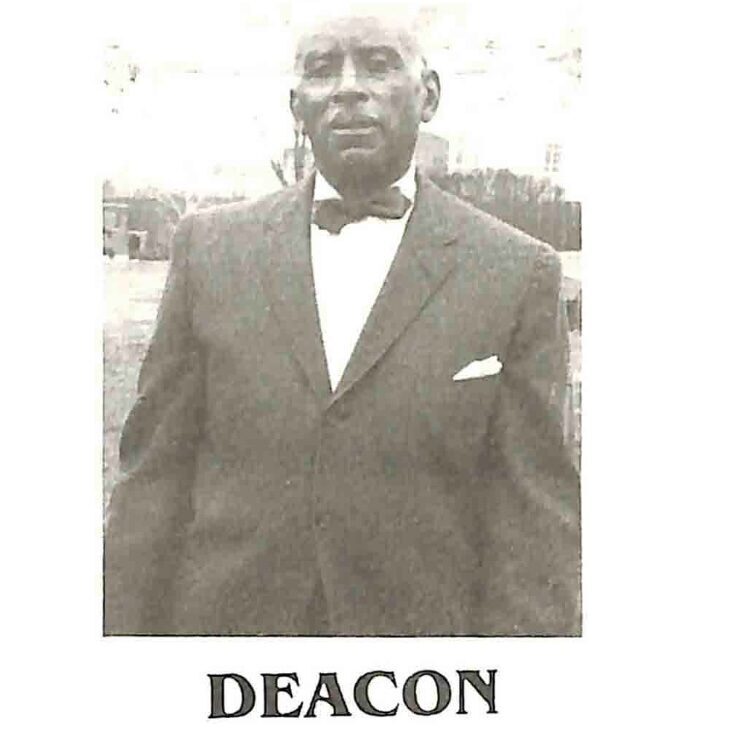
Floyd Hawkins (1895 – 1988)

Floyd Hawkins: I bought 2 acres of land from Ashton Jones for $700 at the end of 19th Street. This was before the country club was built there. I got an extra job and I paid for that land – every week I was out here paying on that land. Ashton Jones said he never saw anybody pay for a piece of ground so quickly. And we were so proud of it. We’d come out here and have picnics on the land, you know, before I had the house built. [Page 3]

Interviewer: This was the father of Ashton Jones, Jr. now living.

Mr. Hawkins: Yeah, Ashton Jones – – – that’s the junior – – I mean the senior, Ashton Jones.

Interviewer: So how long was it before you built a house? Now when did you buy the property?

Mr. Hawkins: I bought the property in 1920. I had a house built on the property after I’d paid for the land. I had a house built and we moved out there in 1925…. [Page 4] 

“Floyd Hawkins Funeral Program,” November 3, 1988. Courtesy, Charlie Clark Center for Local History, Arlington Public Library.

Floyd Hawkins, Interview by Ruth “Cas” Cocklin, March 21, 1986, transcript, Charlie Clark Center for Local History, Arlington Public Library.

Gladys Hall & Margaret Slye

Interviewer: Yeah. You mentioned, too, having known someone who was African American, and knew them all you life.

Margaret Slye: Oh, yeah, the Hall’s Hill people. I grew up with– my father, he had laborers and things from up there and Charlie Chin [Chinn] was the yard manager for Murphy and Ames, and we all grew up with Murphy and Ames Lumber Company. So to this day – in fact, when Holly was here from California, Sunday, she hadn’t been here in 33 years, I took her down to Clarendon, she couldn’t believe it. She couldn’t believe Ballston. Then she said, ‘I’d like to see my grandfather’s office.’ So I brought her up Lee Highway.
And she said, ‘Is Hall’s Hill still here?’
And I said, ‘Yes.’
And she said, ‘Is it a slum place?’
And I said, ‘Heavens, no,’ I said, ‘The Carpenters are carpenters.’ I said, ‘Alston he was some sort of manager for the telephone company. The Fagins[?], he also had a great position with the telephone company.’ I said, ‘There’s a doctor on this corner in that lovely house,” and I said, “there’s the Costleys, are a family of schoolteachers.’ I said, ‘When Mrs. Costley died, there was a whole page in the Washington Post of her contributions. She was in the D.C. school system.’

And I said, ‘It was the most wonderful thing,’ I said, ‘I know these people from voting.’ Because you see, Lexington precinct goes all the way to Edison Street on the west side and east side is part of Glebe. So I said, ‘I know all these people.’

So I said, ‘I’ll take you down there. At Christmastime, Hall’s Hill is a showplace. I’ve never seen such lovely Christmas decorations in my life.’ You can go to Spring Valley, but boy, Hall’s Hill’s got everything beat. The traffic is just creeping because people – the word’s out. Boy, they do a fantastic job. 

Gladys Hall: But there are a lot of African Americans still living there.

Margaret Slye: Oh, but not as many, because the property’s expensive, they’re buying them out. But by and large, you know, it isn’t any slum, believe me.

Gladys Hall: No way, uh-uh. [Page 72-73]

Gladys Hall and Margaret Slye, Interview with Sarah Collins, June 25, 1997, transcript, Charlie Clark Center for Local History, Arlington County Public Library.

Charles W. Smith (1884 -1982)

Charles W Smith: “…[Frank Lyon and I] sold out Lyon Park by 1922. Then we looked for new land.… That was a problem. Mr. Lyon suggested that we go to the Henderson tract, which was out, out on the Arlington Boulevard.” [Page 3]  

Smith continues, explaining he went to the Arlington County Courthouse and spoke with Harry Green, then Arlington’s Commissioner of Revenue. Green and Smith often shared information on the properties that were bought and sold.

Charles W. Smith: “Mr. Green asked how business was. And I told him it had been very good. ‘But we’re in trouble. ‘ He said: ‘What’s the trouble?’ I said ‘We’re running out of land.’ Now Mr. Green assessed the property between five-year assessment periods: and very often he would come to my office, I would tell him what property was sold and what property was improved and how much the improvements were worth. That saved him a lot of time.” [Page 4]

Charles W Smith: “I had complete record over every transfer in our company – made, during those – those years: Just the plat-book records, and when they were deed – and when the deed was recorded, and to whom it was deeded. So he [Mr. Green] could get all the information he wanted. He said, ‘Will you need land?’ ‘Yes, we need land.’ ‘I got the very piece for you.’ This was all sub rosa.” [Page 5].

The County’s Commissioner of Revenue, Green, suggested that Smith develop the Whelan tract, sometimes referred to as the Cruett tract. Although Smith was familiar with the location of this parcel, he allowed Green to describe it. Smith then asked Green what the property was worth. Upon checking his books, Green reported that the parcel had 162+ acres, to which Smith replied:

Charles W Smith: “I offered him $175,000. He said, ‘That’s a lot of money. It was, in those days. He said, ‘Act soon, because some people are trying to buy it. But I want Mr. Lyon to get it, because he’d develop it properly. It won’t be any fly-by-night business – – Mr. Lyon and you.’ ‘I said $175,000 – 162 acres. I’ll tell Mr. Lyon.” [Page 6]

Charles W Smith: “In those days, when you went to the Courthouse, you were known by everybody, and they made a fuss over you – over me especially, because I was the biggest tax-man that paid taxes to the County at the time. Today I reckon a lot of ’em don’t know each other – so many employees in the Courthouse.” [Page 7]

Interviewer: “Well, how, could you describe how you and Frank Lyon began to develop that property [Lyon Village]? Did you lay it off for houses?” [Page 7]

Charles W Smith: [Unintelligible] “When we laid the property off, we had engineers lay out the streets, from side to side of the lots and we never thought of selling more – -… less that 50 feet, because 25 feet was not big enough for – – for a suburban lot. 

Interviewer: Uh-huh

Charles W Smith: This is 25 feet there – this house, this group. … So that property out there is 59 feet wide. But in sections 3 and 4 and 5 and 5A, the lots were a more suitable size. But all laid out by engineers.

We first looked over the property and – – and decided to buy from Mr. Jones what is now called Ashton Heights, but we later gave that back to him….”

“And so we star(t)ed out with a gang of laborers, getting the land in shape. So we had salesmen and they helped us dispose of the property.

We constructed sewers in Lyon Park, the first sewers in Arlington County. Some of the people at the courthouse thought we were kind of queer to put sewers in. Later, they bought them.” [Page 8]

Charles W Smith: At the time I first knew Arlington County, it had (a) population of 18,000, 16,040 in 1910. Then it jumped to about 28 and then on up. Appropriate to that statement, I was called by Fairfax County, to testify before the Fairfax board, as to the evils or the good of garden or high-class apartments. 

When you go to Seven Corners now, on your (flight) you’ll see apartments. That was the property in question. 

The Board listened to the testimony that I gave, among other witnesses, and then called a recess; and after that, asked for more. (They) wanted more of my views on high-rise apartments or garden apartments. 

And I remember tellin’ them – – and I told Arlington County the same thing: you’re never goin’ to raise taxes enough to give you storm sewers, sidewalks, paved streets and water – – unless you’re getting it off land. And you can’t it off the land with single houses. That’s a fact.

So it is my opinion that the time will come when – – when developments like Lyon Park and Lyon Village will be torn down and apartments will be built on ’em; that Arlington County will become the Brooklyn of Manhattan.” [Page 15]

Charles W. Smith, Interview by Lee Metcalf, December 19, 1975, transcript, Charlie Clark Center for Local History, Arlington Public Library.

William [Tommy] Syphax  (1921-1989)

William T. Syphax: “…So we built seventy seven units of apartments there [the Arlington View Terrace garden apartments] and then Fairfax County heard that there was a black builder building for blacks. They needed somebody to build for blacks, so they sent a real estate man to see me and we built 324 family apartments [Oakland Manor – near Bailey’s Crossroads].” [Page 34]

William T. Syphax: “…There were houses needed.

Interviewer: In Arlington?

William T. Syphax: Oh yes. No one was building houses. And frankly because of my contact and my family’s contacts with the Jones and Ruckers, they looked over the prejudice line with me. In other words, back in those days a black person couldn’t get over $6,000.” [ Page 21]

Earlier in the interview, Syphax described his father’s relationship with local realtors as follows:
Interviewer:
And you had good relationships with your neighbors.

William T. Syphax: Oh yes. Back in those days. And my dad, Ashton Jones and the Ruckers were doing development and my father did plastering subcontracting work for them. In other words, they respected each other. The races respected each other. Back in those days too, there were a lot of blacks who were Justices of the Peace and so forth. Remember this is partly Reconstruction, almost Reconstruction age. Remember?

Interviewer: But not when you were born?

William T. Syphax: No, no, no. There was some evil there….” [Page 4]

Interviewer: Where did you get the financing for those?  

The interviewer was referring to properties that W. T. Syphax Real Estate Company held, which included more than 100 houses in Green Valley, High View Park, and at least twenty-five homes in Arlington View. 1

William T. Syphax: Financing I got for the single family homes I got from Mr. Jones. The point was even Jones who was afraid of going out into apartments, he didn’t mind people’s homes but he didn’t believe frankly in blacks and apartments, that they would be able to pay the rents that I said. I said, ‘Look, you know this is mine.’ He said, ‘Yeah, but they are not all like you.’ So I had to build six units at a time. I was able to build all seventy seven. I built six units at a time. And then finally I got to be known. Other banks you know, I’d be getting to know other banks. Then the insurance company, insurance on the big one, down here on the seventy seven, I got the insurance company, Fidelity Mutual Life Insurance, made me a loan.” [Page 35] 

William T. Syphax, interview with Edmund D. Campbell and Ruth “Cas” Conklin, December 8, 1988, transcript, Charlie Clark Center for Local History, Arlington Public Library.

1Arlington County Government: ” Home of Margarite and William T. Syphax” Brochure. 

William H. Pelham Sr.  (1900-2003) 

Interviewer: “…suppose you tell us how you had to get rid of your property – – because you were not allowed to hook up to the water service.

William H. Pelham Sr.: That’s right. That’s the only way I got rid of it because we weren’t allowed to hook up to the water system there, and I went down to the court to see about it, and what they wanted to charge us to put that water in there — it would cost more than the place was worth, you understand? And I wasn’t able to do it so then I had to sell it.

Interviewer: And you think this was a deliberate effort to move you out of there?

William H. Pelham Sr: I really do. I really do.

Interviewer: Do you remember who you saw down at the courthouse or do you remember who was head of the county then?

William H. Pelham Sr: No, I —

Interviewer: What year was this? That would have been about 1925?

William H. Pelham Sr: This was later than that because I moved here in 19 —

Interviewer: ’24. You moved to this area.” [Page 41-42]

Interviewer: There came a time when the property of Pelham Town was largely bought up by other people. 

William H. Pelham Sr: Well, I tell you. After the old heads died off then the children let it get away from them for taxes and what-have-you, you see — and then that big piece of property next to us – Ashton Jones, he bought that. He bought the property next to Old Dominion Dr., and then he sought to get the other part next to us, you see, and then he kept on hounding us about it and doing different things to make it miserable for us, and so then we just come here.

Interviewer: This was Ashton Jones, Sr. who is not now living.

William H. Pelham Sr: That’s right.

Interviewer: The houses in Pelham Town had no water in the houses.  

William H. Pelham Sr: They had no water in the houses, no.

Interviewer: They had no sewer.

Interviewer: Most houses in Arlington didn’t. Did they have a privy outside?

William H. Pelham Sr: Had privies outside. You know we had to clean ’em out and bury them and all that.

Interviewer: And you had no electricity?

William H. Pelham Sr: Well, no we didn’t have no electricity at all.

Interviewer: And was that the condition in all of the houses there?

William H. Pelham Sr: That’s right — all the black houses.

Interviewer: And I suppose the houses fronted on small dirt roads.

Mr. Pelham: That’s right.” [Page 44-46]

William H. Pelham Sr.,  Interview with Edmund D. Campbell and Ruth “Cas” Conklin, November 21, 1986, Charlie Clark Center for Local History, Arlington Public Library.

George L. Vollin Jr. 

Interviewer: Now you say you were born in Queen City. Do you know the address, or can you point it out on this map?

George L. Vollin Jr.: That was a plot of ground, sold to Mount Olive Church by the government. And they lotted it off around 1900 and sold the lots to various people that lived in Arlington Cemetery [County?] at $35 per lot. The lots were 25 feet front and 100 feet in depth. 

Interviewer: So they were fairly deep. And you have pointed out to me, and I have made an ‘X’ on a map here to show the particular lot, the next to the last one, that your family had. How long did you live in that home?

George L. Vollin Jr.: I lived in that home from the time I was born until about 1925, when I moved into East Arlington, a new subdivision which started just about one block from there.

Interviewer: So, can you point that out? We have this map of East Arlington here. You were born on this spot which I have marked here, and where did you move to? 

George L. Vollin Jr.: I moved on South Lynn Street, the 700 block. 720 South Lynn.

Interviewer: So you were just a couple blocks from where you – –

George L. Vollin Jr.:Just a couple blocks from where I was born.

Interviewer: And you were setting up your own home then, or – –

George L. Vollin Jr.: No, I was still living with my mother and father, I’ve never been married.

Interviewer: So all three of you moved.

George L. Vollin Jr.: Well and the rest of the children, because I had a sister and three other brothers, five children.

Interviewer: And what happened to your house, where you were born?

George L. Vollin Jr.: The house I was born in was taken by the government for the extension of roads and parking property for the Pentagon in 1941. [Pages 2 – 4]

 In the Davis-Ruffner Title Company Records, there is an entry for George E. Vollin at 720 S. Lynn Street. In 1940, this property was assessed at $100 ($60 lot + $40 improvements). 1

George L. Vollin Jr., interview with Edmund D. Campbell and Ruth “Cas” Cocklin, March 10, 1992, transcript, Charlie Clark Center For Local History, Arlington Public Library. 

1 Davis-Ruffner Title Company Records, Record Group 153-3-403, folder D69, Charlie Clark Center For Local History, Arlington Public Library.

2 Franklin Survey Company, “Plate 15,” Franklin’s Han-dy Sized Property Atlas, (Philadelphia: Franklin Survey Co., 1938),  Charlie Clark Center for Local History, Arlington Public Library.